






















Future Biogas
Ian Macleod
Oxford Biomedica
Hitachi
Transocean
Dewars
Etex
Hazer Group
Haventus
Kent
Knauf
ASCO
Cytiva
CNR
Arab Academy
SENAI
Petronas
3t Training Services
FMTC
Intebloc
Oxford Brookes
Refresco
Worley
Wood
Thermo Fisher
TMD Friction
Whyte & Mackay
Star Energy
Seftec Group
Seaway 7
Seatronics
Oceanscan
Safer Training
Maersk Training
NHS Grampian
North Star Shipping
Laing Group
Ithaca Energy
Gassco
Glencore
IFF
ASET
AIS Survivex
AKER
Advanced Proteins
2 Agriculture
360 Energy
BW Offshore
Anasuria

Semi-Submersible Operations Training

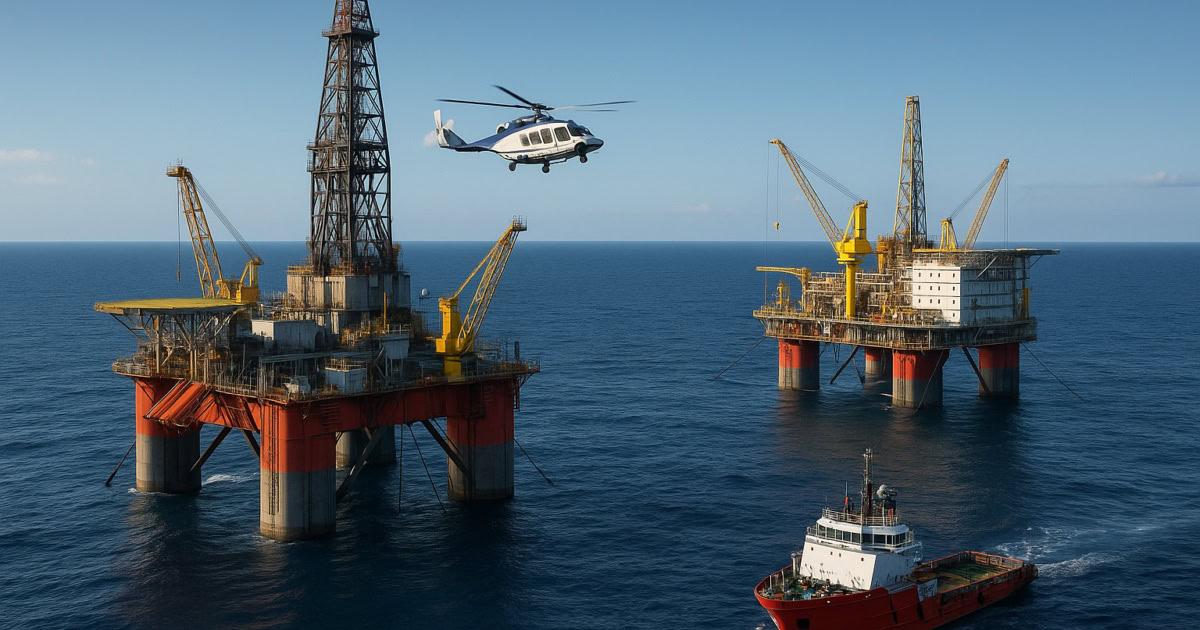
The Pisys Semi-Submersible Operations Training Simulator provides realistic training and assessment for offshore personnel involved in the operation of semi-submersible drilling, production and support vessels.

Trainees can practise stability and ballast control, station keeping, rig moves, anchor handling, cargo operations and emergency response in realistic scenarios without exposing personnel, vessels or equipment to operational risk.

The simulator can be configured for a range of semi-submersible vessel types and training objectives, from individual operator familiarisation through to multi-person Major Emergency Management and team-based exercises.

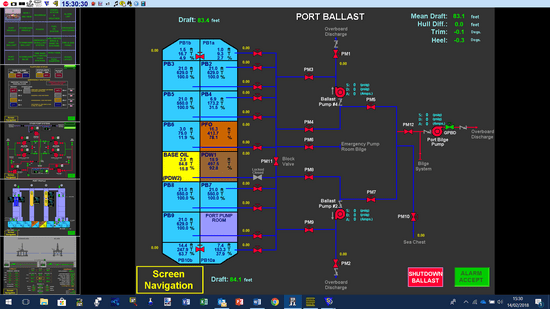
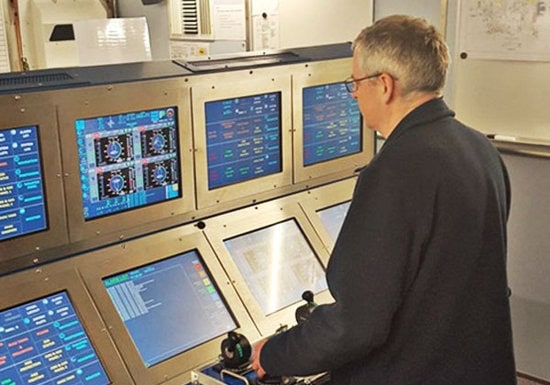
Ballast control panel on semi-submersible

On-Site or Online Training

Pisys training simulators can be delivered on a wide range of hardware, from a single laptop or desktop PC through to fully immersive training environments with multiple displays and motion platforms.

Training can also be delivered online, allowing instructors and trainees to participate remotely without the cost and disruption of travel.
 

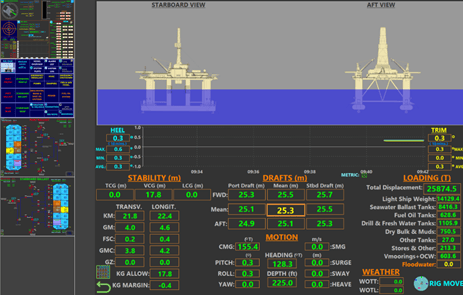
Stability screen on semi-submersible

Realistic Semi-Submersible Training Scenarios

The simulator uses realistic models of offshore drilling and production semi-submersibles for stability, ballast control and station-keeping training and assessment.

Instructors can create a wide range of normal and emergency scenarios, including collisions, loss of watertight integrity, blackouts, equipment failures, cargo shifts, severe weather and mooring failures.

This allows trainees to practise both routine operations and complex emergency response in a safe, controlled environment.

Stability operations on semi-submersible

Multiple vessel types and scenarios supported

The simulator can be configured for a range of semi-submersible vessel types, allowing training scenarios to reflect different operational profiles, loading conditions and stability challenges.

Semi-submersible TypePrimary Training Focus
Deepwater Drilling Semi-SubBallast operations, stability, draft, trim, heel, DP effects, drilling conditions.
Harsh Environment Drilling Semi-SubBallast management in severe weather, survival draft, damage stability, mooring/DP transitions.
Accommodation (Floatel) Semi-SubStability during personnel transfer, crane operations, changing loading conditions, ballast control.
Heavy Lift / Crane Semi-SubStability during heavy lifts, crane outreach, suspended loads, heel compensation, ballast transfer.
Construction / Multi-Purpose Support Semi-SubStability during subsea construction, pipelay support, ROV operations and varying deck loads.
Production Semi-Sub (Semi-FPU)Long-term ballast management, storage effects (where applicable), weather loading, damaged stability.

The Simulator in Action

See how the Pisys semi-submersible simulator is used to recreate realistic vessel operations, system behaviour and emergency scenarios for training and assessment.

The simulator gives instructors control over operational conditions and system failures, allowing trainees to respond to changing situations in real time.

Gaps in traditional training models

  • Limited Exposure to Complex Emergency Scenarios

    Offshore personnel have limited opportunities to experience serious operational failures in real life. The semi-submersible simulator allows instructors to introduce equipment failures, collisions, severe weather, blackouts and other emergencies in a safe, controlled environment.

  • Gaps in Stability and Ballast Control Competence

    The simulator reproduces real-time ballast systems, vessel response and environmental conditions including wind, waves and current. This allows trainees to practise stability and ballast-control decisions under changing operational conditions.

  • Inadequate Understanding of Multi-Vessel Operations

    The RigMove, Barge Master and Anchor Handler modules allow trainees to plan anchor spreads, control multiple AHTs and manage rig moves, towing and mooring operations under variable conditions.

  • Lack of Integration Between Systems and Departments

    The simulator models the interaction between ballast and bilge systems, load distribution, weather, moorings, power distribution and fire and gas systems. This helps trainees understand how changes or failures in one system can affect the wider operation.

Simulation Capabilities

  • Load Distribution

    Model changing loads and their effect on vessel stability, trim and heel.

  • Ballast and Bilge flow

    Simulate ballast transfer, tank levels and bilge system behaviour in real time.

  • Weather

    Introduce changing wind, wave and current conditions to test operational response.

  • Moorings

    Model mooring loads, line behaviour and station-keeping under changing conditions.

  • Power Distribution

    Simulate power generation, distribution and failure scenarios.

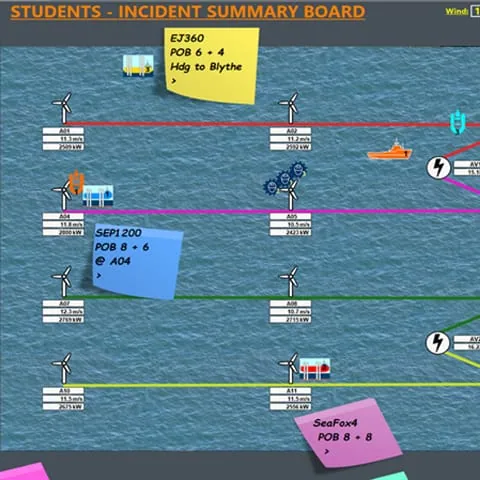
  • AIS Simulator - Real-time vessel tracking interface

    Provide a real-time vessel tracking interface for situational awareness and multi-vessel exercises.

  • Drilling Fluids Loading

    Simulate loading operations and the impact of changing fluid distribution.

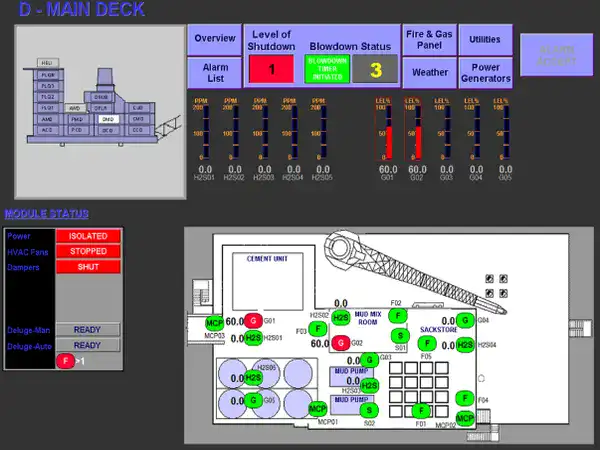
  • Fire & Gas detection and firefighting systems.

    Recreate fire and gas detection, alarm and firefighting scenarios.

  • HVAC and Dampers

    Model ventilation systems and damper operation during normal and emergency conditions.

  • RigMove Module with Mooring deployment, tow lines and managing AHTs.

    Support mooring deployment, tow line management and control of anchor-handling vessels.

  • Accurate hydrostatic and hydrodynamic vessel response

    Model realistic vessel response to loading, ballast and environmental conditions.

  • Motion option for added realism

    Add physical motion for training environments where enhanced immersion is required.

What Our Customers Say

Pisys training simulators are used by training providers and operators to support realistic, configurable simulator-based training across offshore and industrial environments.

A Fantastic Tool

The Pisys simulator has been excellent. It’s a fantastic tool, the customer service has been exemplary, and any project management we’ve needed has been superb.

John Morgan Qatar International Training Centre

Configurability

One of the strengths of the Pisys Training Simulator is that it is easy to change it, add to it, and improve it.

Trevor Riley 3T

Huge Business Benefits

Overall the Pisys OTS simulator is a massive benefit to our business and we're really excited about the new opportunities we're getting as customers find out what we can offer.

Peter Preece FMTC

Frequently Asked Questions