
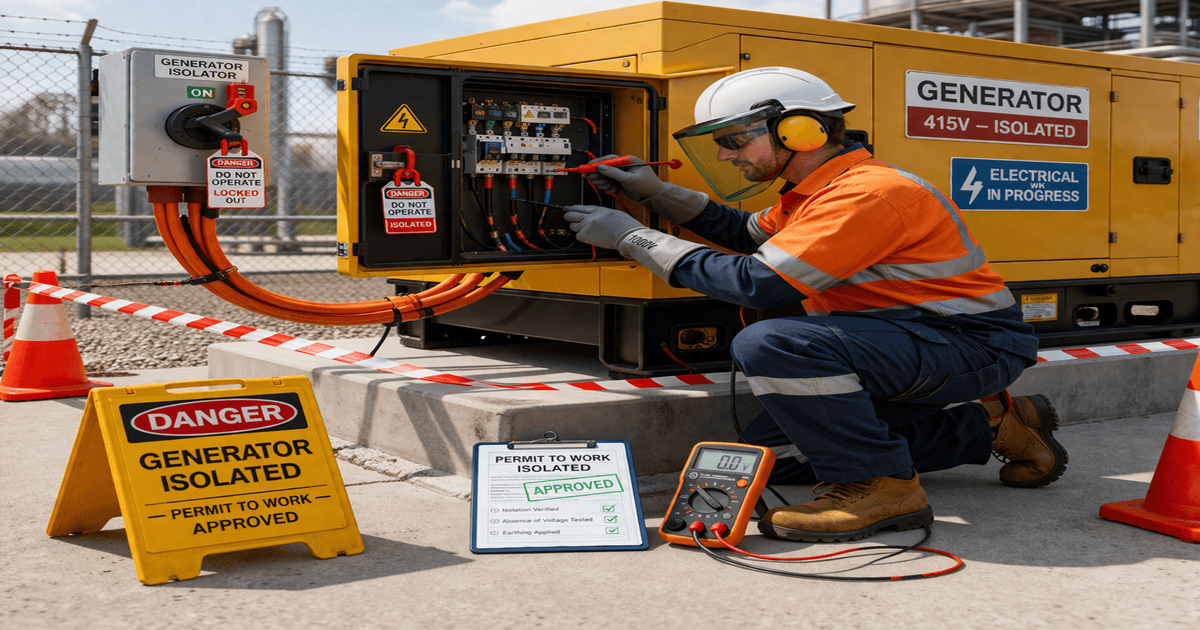

An electrical permit to work is used to control hazardous electrical tasks by making sure the work is properly authorised, reviewed, and carried out under defined conditions. Electrical work can involve serious risks, including electric shock, arc flash, fire, and unintended energisation, so a formal permit process helps ensure the right precautions are in place before work begins. This article provides more information on permit to work.
What is an electrical permit to work?
An electrical permit to work is a controlled authorisation used for higher-risk electrical tasks. This post describes some of the other types of task covered by a permit to work system.
It forms part of a wider permit to work system and is typically used when electrical work cannot be managed safely through routine procedures alone. The permit helps define:
- the work being carried out
- the equipment or area involved
- the hazards present
- the precautions required
- the people responsible
- the conditions for starting, suspending, and completing the job
In practical terms, it helps make sure electrical work is clearly understood and properly controlled.
When is an electrical permit required?
The exact rules vary by site and industry, but an electrical permit is commonly required for tasks such as:
- maintenance on electrical equipment
- switching operations
- testing and fault-finding
- work on or near live systems
- high-voltage work
- work involving isolations and re-energisation
- contractor work on electrical assets in live operational areas
The more significant the electrical risk, the more important it is to manage the work through a clear permit process. The HSG250 standard provides more information on the UK HSE requirements
Why is electrical work high risk?
Electrical work can create hazards that are severe, fast-acting, and sometimes not immediately visible.
Common risks include:
Electric shock
Contact with live conductors or energised equipment can cause serious injury or death.
Arc flash and burns
Electrical faults can release intense heat and energy in a fraction of a second.
Fire and explosion
Electrical faults or poor control measures can ignite combustible materials or trigger wider plant risks.
Unintended energisation
If isolation is incomplete or poorly communicated, systems may be re-energised while work is still underway.
Miscommunication
Where responsibilities, boundaries, or conditions are unclear, the likelihood of error increases.
This is why electrical tasks often require stronger formal control than lower-risk maintenance activities.
What should an electrical permit include?
A good electrical permit to work should clearly record the conditions under which the task can proceed.
Typical elements include:
- description of the work
- exact location or equipment affected
- identified hazards
- required precautions
- isolation status
- lockout or tagging requirements where relevant
- responsible persons
- authorisation details
- start and finish times
- suspension and handback arrangements
The aim is to make sure everyone involved understands what is being done, what conditions apply, and what must happen before the work is considered complete.
Electrical permits, isolations and LOTO
An electrical permit is closely related to isolations and lockout/tagout (LOTO), but they are not the same thing.
LOTO is a method used to isolate energy sources and prevent unexpected energisation.
An electrical permit to work is the broader control that authorises the task and sets out the conditions for the work.
So in many situations:
- LOTO helps physically secure the system
- the electrical permit helps manage the task safely and formally
Both are important, but they do different jobs.
Common mistakes when managing electrical permits
Electrical permit systems can fail if they are treated as paperwork rather than an active control.
Common problems include:
- unclear scope of work
- incomplete isolation details
- poor communication between teams
- permit conditions not updated after changes
- weak coordination between operations and maintenance
- poor visibility of live permits
- insufficient close-out checks before re-energisation
These issues become more serious in busy or high-risk environments where several activities may be happening at once.
How digital permit to work systems can help
Digital permit to work systems can strengthen electrical work control by improving visibility, traceability, and coordination.
Potential benefits include:
- clearer approval workflows
- better visibility of active permits
- improved coordination between teams and contractors
- stronger audit trail
- easier status tracking and reporting
- more consistent management of handback and close-out
A digital system does not replace good process discipline, but it can make electrical permit control easier to manage, especially across complex sites.
Final thoughts
An electrical permit to work is an important control for managing hazardous electrical tasks safely. It helps ensure the work is properly authorised, the right precautions are in place, and everyone involved understands the conditions under which the task can proceed.
Where electrical risks are significant, a clear permit process supports safer work, better communication, and stronger operational control.
If you're looking for a digital, cloud based PTW system the Pisys Electronic Permit to Work system is used worldwide
