

What MEMIR Is Asking of an OIM
The core of MEMIR training is command. The OIM must identify what is happening, determine the correct level of response, and ensure that response is executed quickly, clearly and in the right sequence. They are managing people, systems and information simultaneously, often with incomplete data and competing demands on their attention. Research into offshore emergency response consistently highlights the first minutes of an incident as the period most critical to outcome. Decisions made in that window determine whether an event is contained or escalates.
Scenarios are designed to be realistic and stressful, with delegates assessed on their ability to maintain control, communicate effectively and lead their team through an unfolding situation. Constructive debrief is central to the process: what the OIM decided, why, and what effect it had.
The Dual-Activity Problem
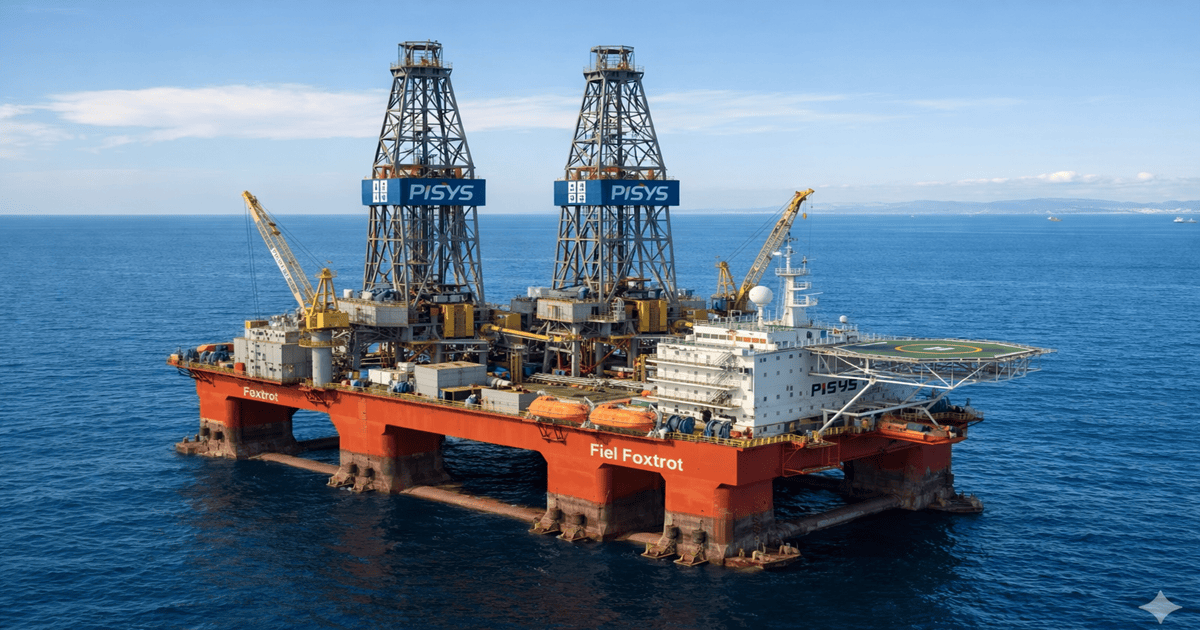
A single-derrick rig has one drill floor and one drilling crew to account for. When something goes wrong, the response picture is demanding but bounded. A double-derrick vessel operates differently. Two work areas can be running concurrently, each with its own crew, its own equipment and its own operational state. They share power generation, fluid systems and the deck between them.
The moment an emergency develops, the OIM inherits a more fragmented picture. What is the status of the second work area? Can it continue safely, or does it need to be stood down? Does standing it down create a secondary risk? These are not straightforward questions, and they have to be answered while the primary incident is still unfolding. The cognitive load on the OIM is of a different order to that on a conventional rig, and so is the communication requirement across the vessel.
Systems That Do Not Behave Independently
Part of what makes dual-activity emergency management difficult to train for generically is the degree to which vessel systems are interconnected. Power demand, for example, does not simply halve when one work area goes offline. Emergency loads activate, normal loads shed in unpredictable sequences, and the net effect on thruster capacity and station-keeping can be difficult to anticipate without specific familiarity with the vessel's power architecture.
Similarly, a Fire and Gas activation in the vicinity of the drill floors draws in both crews, affects escape route planning and places simultaneous demands on the OIM that a single drill floor scenario does not replicate. The vessel's size and the concentration of activity in that area make the response picture materially different.
Deepwater Adds Another Layer
Deepwater operations introduce station-keeping as a standing concern that sits alongside every other emergency priority. The vessel must hold position throughout. On a double-derrick semi-submersible, with greater topside mass and wind loading than a conventional semi, the DP system is already working harder under normal conditions. Any emergency that touches the power plant or propulsion system creates an immediate second front for the bridge team, while the OIM is simultaneously managing what is happening on the drill floors and the muster stations.
This is the environment the OIM will actually face. Generic MEMIR training on a production platform simulator develops real and valuable skills, but it does not replicate the specific pressure of commanding a dual-activity deepwater drilling vessel through a major emergency. The systems, the crew configuration, the interdependencies and the decision landscape are all different enough to warrant dedicated training in an environment that reflects them accurately.
Learn more about the Pisys Double Derrick MEMIR training simulator
