A Permit to Work system is often described as a process, but it is more accurate to think of it as a sequence of decisions. Each step in the workflow represents a point at which someone must confirm that the conditions for safe work have been met before the next stage can begin. Understanding those steps - what they involve, why they exist, and what can go wrong when they are skipped, is essential for anyone responsible for implementing or improving a PTW process.
The workflow described here reflects common practice across industries. Individual organisations will vary in how they structure and name each stage, but the underlying logic is consistent: work is planned, reviewed, authorised, executed under supervision, and formally closed. Each stage builds on the one before it.
Read our overview of what a PTW system is and why it matters before going further if you are new to the subject.
Identifying the Need for a Permit
The workflow begins before any form is raised. Someone (typically the person requesting or planning the work) must first determine whether the task requires a permit at all.
Not all work requires a formal permit. PTW systems are designed for activities that carry a higher-than-normal level of risk: hot work, confined space entry, electrical isolation, work at height, lifting operations and similar tasks. Applying a permit to routine low-risk work adds bureaucracy without adding safety value, and can actually undermine the system by making permits feel like paperwork rather than meaningful controls.
Organisations should have clear criteria for when a permit is required. These criteria are typically based on the nature of the task, the environment in which it will take place, and the hazards involved. Where uncertainty exists, the default should be to raise a permit rather than assume one is not needed.
Defining the Scope of Work
Once the need for a permit is established, the next step is to define exactly what work will be done, where, by whom, and when. This scope definition is one of the most important steps in the entire workflow, yet it is frequently rushed or treated as a formality.
A poorly defined scope creates risk at every subsequent stage. Hazard identification becomes unreliable if the task is vaguely described. Controls may not match the actual work. Authorisers cannot make an informed decision without understanding what they are approving. And if something goes wrong during execution, a vague scope makes it much harder to understand how and why.
The scope should describe the specific activity, the precise location, the individuals involved, the equipment being used, and the time window during which the permit will be valid. Phrases like "general maintenance" or "electrical work in the plant room" are not adequate. The description should be detailed enough that someone unfamiliar with the task could understand exactly what is planned.
Identifying Hazards
With the scope defined, the permit requester must identify the hazards associated with the work. This is not a generic exercise. The hazard identification should be specific to the task, the location, and the timing of the work, not simply a list carried over from a standard template.
Hazards to consider include energy sources, environmental conditions, the presence of flammable or hazardous substances, access constraints, the proximity of other people or activities, and the potential for conditions to change during the work. In environments where simultaneous operations are taking place, hazard identification must also account for interactions with other work happening at the same time.
This stage often draws on existing risk assessments, method statements or job safety analyses. These documents provide a useful foundation, but the permit should translate that general risk information into the specific context of this particular instance of work.
For a detailed look at the techniques available for hazard identification, including HIRA, FMEA and fault tree analysis, read our guide to risk identification techniques.
Specifying Control Measures
Identifying hazards without defining controls achieves nothing. The next step is to specify the measures that will be put in place to manage each hazard before and during the work.
Controls may include physical isolations, barriers and exclusion zones, specific PPE requirements, environmental monitoring, competency requirements for those carrying out the work, supervision arrangements, and restrictions on when or how the work can proceed. Each control should be specific and verifiable, not a general instruction to "take care" or "be aware of hazards."
A critical principle at this stage is hierarchy of control. Where possible, hazards should be eliminated or substituted rather than simply managed with protective measures. A permit that relies entirely on PPE to manage a risk that could be eliminated through isolation or sequencing is not a well-designed permit.
Checking for Conflicts with Other Work
Before a permit is submitted for authorisation, the requester should check whether the planned work might interact with other activities taking place at the same time or in the same area. This conflict check is a core part of managing simultaneous operations safely.
In practice, this means reviewing other active and planned permits to identify potential overlaps. If hot work is planned in an area where another team is working with flammable materials, that conflict needs to be identified and managed before either permit is issued. If a lifting operation will create suspended loads above a work area used by other personnel, both activities need to be coordinated.
This step is one of the areas where digital PTW systems provide the greatest advantage over paper-based processes. When all permits are visible in a central system, conflict checks can be carried out systematically rather than relying on informal communication or individual knowledge.
Independent Review
Before a permit can be authorised, it should be reviewed by someone other than the person who raised it. This independent review is a deliberate check against the assumptions and blind spots that can affect anyone planning work they are closely involved with.
The reviewer should assess whether the scope is clear, whether hazards have been identified correctly, and whether the proposed controls are proportionate and realistic. They should challenge anything that seems vague, incomplete or inconsistent with the actual conditions on site.
This is not a rubber-stamping exercise. The value of independent review lies in the quality of scrutiny it brings. An authoriser who simply countersigns a permit without reading it carefully is not fulfilling this role.
Authorisation
Authorisation is the formal decision that work may proceed. It confirms that the permit has been reviewed, that risks are adequately controlled, and that the relevant personnel, equipment and conditions are in place.
Only a competent, designated person should have authority to issue permits. That authority should be defined by role and by the type of work involved, a permit authoriser for electrical isolation work may not have the authority or competence to authorise confined space entry, and vice versa.
Authorisation also sets the boundaries within which work may take place. The permit defines what is authorised, not just whether it is authorised. Any work that falls outside the scope of the permit requires a new or amended permit before it can proceed.
Communicating Permit Conditions to the Workforce
A permit that has been carefully prepared and properly authorised still has no value if the people carrying out the work do not understand its conditions. Communicating permit requirements to the workforce is a step that is easily overlooked, particularly under time pressure.
The permit holder, typically the supervisor or team leader responsible for the work , is responsible for ensuring that everyone involved understands the hazards, the controls in place, and the limits of the authorised scope. This briefing should happen before work starts, not during it.
The permit itself should be available at the worksite throughout the duration of the task. In digital systems, this may mean displaying the permit on a device or providing a printed copy. Personnel should be able to refer to it if conditions change or questions arise.
Executing and Supervising the Work
Once the permit has been communicated and all pre-work checks are complete, work can begin. The permit does not become passive at this point. It remains active and must be managed throughout the duration of the task.
Supervision during execution serves several purposes. It ensures that work is being carried out as described in the permit, that controls remain effective, and that any changes in conditions are identified and acted upon promptly. If something changes: personnel, equipment, environmental conditions, or the work scope itself, the permit must be reviewed to confirm it remains valid.
If the permit conditions are no longer valid, work should stop. Continuing to work under an outdated or inaccurate permit is one of the most common ways in which PTW systems fail in practice.
Suspending Work
There are circumstances in which work must stop before it is complete. Weather changes, equipment failures, personnel changes, the start of a conflicting activity nearby, or any significant change in conditions may require work to be suspended.
Suspension is a formal step in the workflow, not an informal pause. When work is suspended, the permit status should be updated to reflect this, controls should be confirmed as still in place, and the worksite should be left in a safe condition. Personnel should be informed that work has stopped and understand that it cannot resume without a formal reinstatement check.
This structure prevents the common scenario where work pauses informally, conditions change in the meantime, and work resumes without anyone having assessed whether the original permit conditions still apply.
Reinstating Work
Before suspended work can resume, the permit must be formally reinstated. This involves confirming that conditions on site are consistent with the permit requirements, that all controls are still in place, and that nothing has changed that would affect the safety of the work.
Reinstatement is often treated as a simple formality, but it deserves genuine attention. The interval during which work was suspended may have been long enough for significant changes to occur, other work may have started nearby, isolations may have been disturbed, environmental conditions may have shifted. Reinstatement is the opportunity to catch those changes before work resumes.
Closing the Permit
Formal close-out is the final step in the workflow and one that is frequently undervalued. Closing a permit confirms that work is complete, that the worksite has been left in a safe condition, that all temporary controls have been addressed, and that equipment has been returned to its normal operating state or formally handed back.
Close-out also creates a record. The completed permit documents what work was done, under what conditions, and with what controls in place. That record has value for audits, for incident investigations, and for organisational learning. A permit closed properly is a reliable piece of evidence. A permit that was never formally closed, or that was closed without proper checks, is a gap in the safety record.
Without formal close-out, residual hazards can remain unnoticed. Isolations left in place after work is complete can prevent normal operations. Temporary barriers or warning signs that are not removed can lose their meaning. The close-out step exists to prevent these oversights.
Why Each Step Matters
PTW workflows are sometimes criticised for being bureaucratic or slow. That criticism usually reflects a system that has been poorly implemented rather than a problem with the process itself. When each step is understood as a safety intervention rather than an administrative requirement, the workflow takes on a different character.
The real value of a structured PTW workflow is that it provides multiple opportunities to identify and correct problems before harm occurs. Each step :scope definition, hazard identification, conflict checking, independent review, authorisation, briefing, supervision, suspension, reinstatement and close-out represents a point at which risk can be caught and managed. Removing or shortening any of those steps reduces the number of opportunities to get things right.
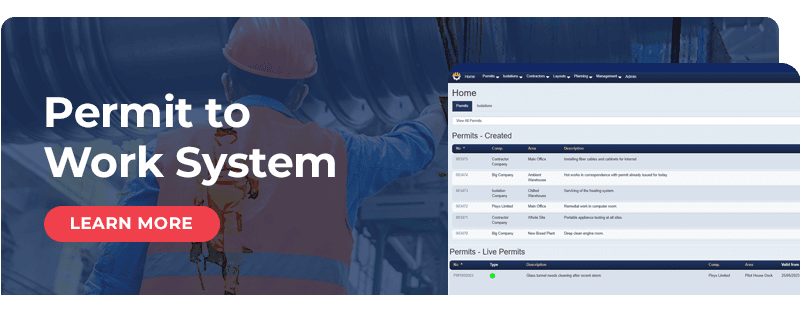
Organisations that invest in understanding and embedding each stage of the workflow, rather than treating the permit as a form to be completed, are the ones that get the most safety value from their PTW systems. A platform such as the Pisys Electronic Permit to Work system supports each of these stages within a single, auditable digital workflow, helping teams maintain consistency and visibility at every step.
Summary
A Permit to Work workflow is a sequence of connected decisions, each one building on the last. From identifying the need for a permit through to formal close-out, every step serves a specific purpose in ensuring that hazardous work is planned, controlled and completed safely.
Understanding the workflow in full (not just the steps that feel most visible, like authorisation and execution), is what separates organisations that use PTW as a genuine safety tool from those that treat it as a compliance obligation. The steps are a control system, and each one matters.