


This article is part of a series on Permit to Work systems . Read 'What is a PTW system and why is it important? to learn more
A Permit to Work (PTW) system and risk assessment software are both essential tools for managing hazardous activities safely. When these systems operate independently, important information can become fragmented or lost between platforms. But when they are integrated, organisations gain a more complete, connected view of risk and control, and are better positioned to prevent incidents before they occur.
Bridging the gap between how risks are identified and how work is authorised helps teams make safer decisions, maintain compliance, and build confidence that controls are consistently applied and verified.
Why Integration Matters
Permits and risk assessments both serve risk management, but they do so from different angles. Risk assessments define hazards and determine controls before work begins. Permit to Work processes ensure those controls are put into practice every time work is carried out.
When these systems are disconnected, risk information can be lost in translation. Risk assessments might be updated without reflecting in current permits, and permit creators may not have ready access to the latest risk context. This creates gaps that reduce the effectiveness of both processes.
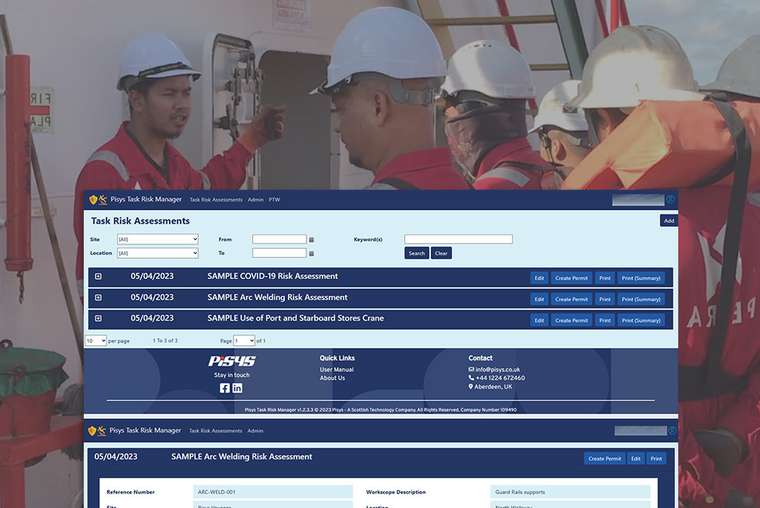
Integrating a PTW process with risk assessment software ensures that hazard data, control measures and risk ratings can support permit planning in real time, and that permit conditions align with the most up-to-date risk information.
What should an Integrated Risk Assessment contain
Typically a permit will contain a reference to a risk assessment for the planned activity. The details may vary between risk assessments but typically they should include the following:
- Identification of significant risks
- Should enable the client/contractor to identify and prioritize control measures
- Should be appropriate to the nature of the work and proportionate to the risks
- Should be Valid for a reasonable time
- Should be completed by a competent person
It's also common for a risk assessment to to drive the permit to work process, so where a control is identified during a risk assessment an appropriate permit can be created to perform the required works
Aligning Risk Profiles with Work Authorisation
One of the biggest benefits of integration is the ability to bring risk profiles directly into the permit planning workflow. Instead of permit creators having to manually search for and interpret risk documents, the system can automatically surface relevant hazards and associated controls based on task type, location or activity. It's also common for risk assessments to drive the permit to work process, so where a control is identified during a risk assessment an appropriate permit can be created to perform the required works
This alignment ensures that permits always reflect the latest understanding of risk. For example, if a risk assessment identifies a particular energy source or a failure mode as significant for a task, that information can be embedded directly into the permit template. Permit planners do not need to recreate risk logic or guess what conditions matter most, they see it automatically.
Improving Consistency and Reducing Errors
Manual cross-referencing between risk assessments and permits introduces variability and increases the chance of error. When people have to copy and paste risk information or rely on memory, inconsistencies inevitably arise.
Integrated software eliminates this friction by making risk information and permit requirements part of the same workflow. Actions, safeguards, control measures and required competencies flow seamlessly from risk assessment into permit conditions. This not only saves time but also improves consistency across teams and sites.
When everyone works from the same source of truth, misunderstandings and omissions are far less likely.
Supporting Dynamic Risk Management
Work environments are dynamic. Conditions change, new hazards emerge and work scope can evolve over time. A static risk assessment that sits apart from a permit system will struggle to keep pace with these changes.
Integration allows risk assessments to be updated centrally and propagate those updates into permit logic as appropriate. If a new hazard is identified or a control measure changes, the permit workflow can reflect those changes.
This dynamic approach helps ensure that risk management remains relevant throughout the life of a job, not just at the planning stage.
Improving Visibility and Reporting
When permit and risk data are integrated, organisations gain a clearer, more actionable view of safety performance. Leaders and HSE teams can see not only which permits are active, but how well risk controls are represented within them, how many times certain hazards have been triggered, and where risks may be recurring.
This visibility supports better decision-making at all levels. Rather than basing status reports on fragmented spreadsheets or disconnected documents, leaders can view consolidated dashboards and trend data that link work execution back to risk profiles.
This helps detect patterns, highlight areas needing attention and provide assurance that risk management is working as intended.
Supporting Compliance and Audit Preparedness
Integrated systems also make compliance and audits easier. With risk and permit data linked, audit trails become clearer and more comprehensive. Permits show not only that controls were signed off, but also where those controls originated in a risk assessment. This provides stronger evidence of due process and due diligence.
For organisations subject to frequent inspections, having this level of transparency reduces administrative burdens and helps demonstrate that risk and permit processes are aligned with organisational policies and regulatory expectations.
Driving Continuous Improvement
Finally, integrating Permit to Work processes with risk assessment software supports a more effective cycle of continuous improvement. When data flows between systems, teams can analyse not just individual events, but how risk profiles and mitigation efforts evolve over time.
Lessons learned from incidents, near misses or trending hazards can be tracked back into risk assessments and then reflected in future permits. This closes the feedback loop and ensures that the organisation learns from experience rather than repeating the same oversights.
Practical Considerations for Implementation
Successful integration starts with clear definitions of risk, hazards and controls. Organisations should ensure that risk assessment libraries are maintained and aligned with organisational terminology so that the correct context flows into permit logic.
Mapping risk fields to permit conditions such as hazard type, required controls, PPE, isolation points and competencies, helps streamline configuration and avoids confusion in use. Regular review and governance over both risk and permit templates ensures they remain aligned as operations and hazards evolve.
Engaging frontline users during design also improves adoption. When planners and supervisors see that the integrated system reflects real work conditions and reduces manual effort, they are more likely to embrace the change.
Connected and Consistent Approach
Integrating a Permit to Work process with risk assessment software creates a more connected, consistent and dynamic approach to managing hazardous work. It reduces errors, improves visibility, supports compliance and strengthens links between risk identification and safe execution.
A combined system helps ensure that work is authorised with the most current understanding of risk, that controls are verified and that lessons learned are captured and reused. In an environment where complexity and risk are increasing, integration is a practical way to improve safety performance and operational confidence.

