

Published: 29 January 2026
Updated: 13 July 2026
High-Voltage Switching Training: Why Simulation Is Critical
High-voltage switching is one of the most safety-critical activities in the energy sector. Whether carried out in transmission networks, distribution systems, offshore substations or large industrial facilities, switching operations involve complex sequences where a single error can result in serious injury, equipment damage or widespread system outages. As electrical grids expand and become more complex to accommodate new energy sources, the need for robust, effective high-voltage switching training has never been greater. Simulation-based training plays a critical role in meeting this need, a point reinforced in the wider discussion on simulation-based training in the energy sector.
What Is High-Voltage Switching?
High-voltage switching refers to the controlled operation of circuit breakers, disconnectors, earthing switches and associated protection systems to safely energise, de-energise, isolate or reconfigure electrical networks. These activities are governed by strict safety rules and require coordination between control rooms, field personnel and protection systems. Switching is often carried out during maintenance, commissioning, fault response or network reconfiguration, and errors can have immediate and severe consequences.
Why High-Voltage Switching Is High Risk
High-voltage environments present inherent hazards, including electric shock, arc flash and induced voltages. Beyond personal safety, incorrect switching can lead to equipment damage, cascading faults and loss of supply across large areas. Many switching operations are infrequent, meaning authorised personnel may not regularly practise complex or unusual sequences. This combination of high consequence and low frequency mirrors challenges seen across other energy operations.
Limitations of Traditional HV Switching Training
Traditional approaches to high-voltage switching training typically include classroom instruction, procedures review, mentoring and on-the-job experience. While essential, these methods have limitations. Live switching opportunities are constrained by operational risk, and many critical scenarios cannot be practised on energised systems. As a result, personnel may be fully authorised yet have limited experience of complex fault conditions, abnormal configurations or emergency restoration scenarios. Simulation addresses this gap by enabling realistic practice without exposing people or assets to danger.
How HV Switching Simulators Work
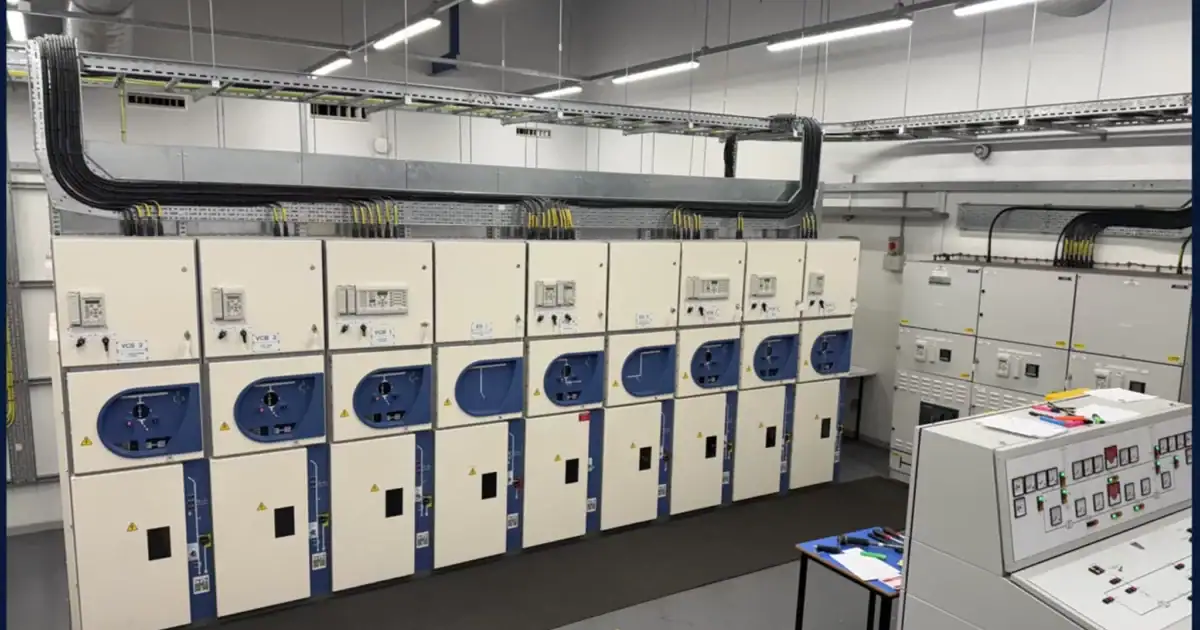
High-voltage switching simulators replicate electrical networks, protection systems and switching devices using detailed system models and realistic interfaces. Trainees can practise switching sequences, isolation procedures, fault diagnosis and restoration activities while seeing the real-time consequences of their actions. Simulators can replicate both normal and abnormal system behaviour, allowing operators to understand how networks respond to configuration changes, protection actions and failures.
Enhancing Emergency and Fault Response Capability
High-voltage switching simulators are particularly valuable for training fault response and emergency scenarios. Faults rarely present in a neat or predictable way, and switching decisions often must be made under time pressure with incomplete information. Simulation allows authorised personnel to practise recognising abnormal conditions, coordinating with control rooms and restoring supply safely.
Supporting Grid Expansion and the Energy Transition
The energy transition is driving rapid expansion and reconfiguration of electrical grids. Offshore wind farms, interconnectors, battery storage and distributed generation are introducing new operating modes and increasing system complexity. Offshore substations and export cables add further interfaces between marine and electrical operations. High-voltage switching simulators help prepare personnel for these evolving systems by allowing them to practise commissioning, integration and fault scenarios associated with new assets.
Online and Pay-Per-Use HV Switching Simulation
Advances in digital technology mean that many high-voltage switching simulators are now available online via cloud platforms. This enables remote access, flexible scheduling and pay-per-use delivery models. Online simulation makes HV training more accessible to geographically distributed teams and contractors, supports refresher training, and allows rapid response to changes in network configuration or procedures. These delivery models reduce reliance on infrequent classroom courses and support continuous competence development.
Developing Non-Technical Skills in Switching Operations
Effective high-voltage switching relies not only on technical knowledge but also on communication, coordination and situational awareness. Miscommunication between control rooms and field teams is a known contributor to switching incidents. HV simulators provide a platform for practising these non-technical skills in realistic scenarios.
Implementation Considerations
To deliver value, high-voltage switching simulators must accurately reflect real network configurations, protection schemes and operating procedures. Models should be updated as networks evolve, particularly as new renewable assets are integrated. Instructor capability is also critical. Skilled facilitation and structured debriefing help trainees understand not only what happened during a simulation, but why it happened and how different decisions would have changed the outcome.
Simulation as Part of a Blended HV Training Strategy
High-voltage switching simulators are most effective when used as part of a blended training approach that combines classroom learning, procedural review, mentoring and field experience. Simulation provides the missing link by allowing safe, repeatable practice of complex and hazardous scenarios that cannot be rehearsed live. When aligned with real operational risks, simulation strengthens competence, reduces the likelihood of error and supports safer grid operation.
Conclusion
As electrical networks expand and become more complex, high-voltage switching training must evolve to keep pace. Simulation-based training offers a proven, practical way to prepare authorised personnel for both routine and exceptional switching activities without exposing people or assets to unnecessary risk. By improving procedural accuracy, reducing human error and enhancing emergency response capability, high-voltage switching simulators play a critical role in maintaining safety, reliability and resilience across modern energy systems
To find out more about the Pisys High Voltage Training Simulator Click Here