'Since launching the MEMIR training simulator in the late 90's we have seen again and again that Simulation is an invaluable means to train energy sector staff to deal with the type of situations we hope they never have to face'
Ray Allen, Director
Realism is our priority
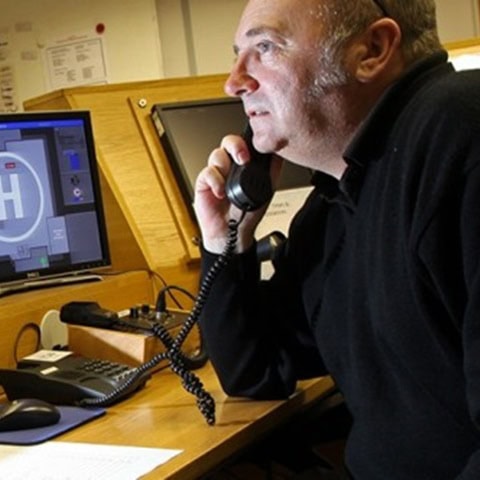
Students and Instructor interact with voice, simulated radio, PA and email while interacting with control systems modelled on physical systems. Instructors can create scenarios which can be paused and replayed or stored for future use
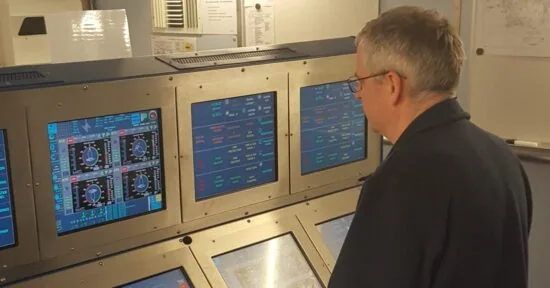
If required the system can be supplied with control room hardware - including a moving platform for ultimate realism. We can replicate your existing hardware to whatever level of fidelity is required.
The control room is large enough to accommodate a full CRO team. The moving platform option allows weather and other vessels to be brought into play.
Unlimited Choice
Choose from off-the-shelf models including Offshore Platforms, Jack-up, Semi-sub, Wind Farm, Onshore Plant or Generic MEMIR
OR Let us model your asset/scenario for the ultimate immersive training experience
COVERS OPITO STANDARDS INCLUDING:
9004: Control Room Operator Emergency Response
7228: Major Emergency Management - Initial Response Training
7025: OIM Controlling Emergencies
7031: Onshore Control Room Operator Emergency Response Standard
7057: Offshore Muster Checker Workplace Competence Assessment
7058: Offshore Muster Coordinator Workplace Competence Assessment Standard
9030: Plant Manager/Incident Commander Initial Response Training
What Our Customers Say
A Fantastic Tool
The Pisys simulator has been excellent. It’s a fantastic tool, the customer service has been exemplary, and any project management we’ve needed has been superb.
Configurability
One of the strengths of the Pisys Training Simulator is that it is easy to change it, add to it, and improve it.
Huge Business Benefits
Overall the Pisys OTS simulator is a massive benefit to our business and we're really excited about the new opportunities we're getting as customers find out what we can offer.
BOOK A DEMO
We’ll walk you through our MEM/IR Training Simulator; letting you evaluate its features and user experience first-hand.
Some benefits include:
Safe environment to practice high-risk operations (e.g., punch-through, leg extraction) without real-world consequences.
Ability to train for rare/unplanned events and varied environmental/seabed conditions.
Enhanced familiarity with instrumentation/control panels in a realistic environment.
Potential cost savings by reducing real asset downtime and risk, and improving operator competence before real-world deployment.
The system can be deployed on-site, with a moving platform option if required for added realism. It is also available on-line as part of our 'train without travelling' range,
Major Emergency Management (MEM) is the coordinated process of preparing for, responding to, and recovering from serious offshore incidents such as loss of containment, fire, explosion, structural failure, vessel collision, or major medical emergencies. MEM ensures that offshore teams can protect life, the environment, and critical assets under high-stress conditions.
The OIM is the Incident Commander offshore. They hold statutory responsibility to:
Take command of the emergency
Ensure personnel safety
Coordinate response teams
Liaise with onshore emergency support
Make strategic decisions under pressure
Maintain communication with support vessels and rescue assets
Simulation-based training prepares OIMs for these high-consequence scenarios.
The Control Room is the communication and situational awareness hub of the installation. Operators manage:
Alarm systems and safety instrumented systems
Muster verification
Radio and PA communications
Permit suspensions
Safety-critical engineering information
Continuous updates for the OIM and Emergency Response Teams
A well-trained Control Room Operator (CRO) is critical to coordinated incident management.
Typical offshore major emergencies include:
Hydrocarbon release (gas or oil)
Fire or explosion
Major equipment failure (e.g., turbine, crane, or power systems)
Structural integrity issues
Helicopter or vessel collision threats
Man overboard
Medical emergencies requiring MEDEVAC
Extreme weather or station-keeping failures (for floaters)
Each requires rapid hazard assessment and coordinated command.
Offshore assets communicate directly with shore-based support to share:
Situation updates
Resource requirements
Media/communication strategy
Logistics for MEDEVAC or SAR
Well control or engineering support
Onshore teams provide additional expertise and coordinate with regulators and external responders.
Major emergency management generally follows three phases:
1. Initial Response – Detecting the event, confirming alarms, immediate lifesaving action.
2. Escalation Control – Isolating hydrocarbons, deploying fire teams, maintaining control of systems.
3. Recovery – Accounting for personnel, stabilising the asset, transitioning to normal operations or evacuation if required.
Key hazards include:
High-pressure gas releases
Confined-space fires
Machinery room fires
Electrical faults
Evacuation during adverse weather
Helideck incidents
Dropped objects and crane failures
Marine collisions
These scenarios are built into training exercises and simulators.
Training builds competence in:
High-stress decision making
CRO alarm response
Command team communication
Practical firefighting and rescue
Team coordination and role clarity
Regulatory compliance with MEM & OPITO standards
Simulation-based training enables realistic, repeatable incident scenarios.
Drills test an installation’s readiness and ensure:
Personnel know muster and evacuation procedures
Teams can deploy firefighting and rescue equipment
Communication paths are functional
Control room operators can manage alarm flows
The OIM can demonstrate effective leadership and command
Simulations reveal gaps in training or procedures before a real emergency occurs.
Simulation provides:
Realistic alarm panels and system behaviour
Dynamic scenario evolution
Communication practice under stress
Multi-team coordination exercises
Exposure to rare, high-consequence events
Improved confidence and decision-making
This ensures personnel are prepared for the unique risks of offshore operations.
Most installations have:
Emergency Response Team (ERT) / Fire Team
Medical response team
Lifeboat / evacuation coxswains
Damage control or engineering support team
Marine control team
Helicopter landing officer (HLO) team
Each team receives specialist training and drills.
Communication is maintained using:
Dedicated emergency radio channels
Public address and general alarm systems
Hardwired telephones
Redundant power supplies
Direct contact with Marine Control, standby vessels, and onshore Emergency Response Teams
Clear, structured communication is essential to prevent confusion during rapidly evolving events.
Cyber Essentials Certified
Cyber Essentials helps us guard our organisation against cyber attacks. This is important because vulnerability to basic attacks can mark us out as a target for more in-depth unwanted attention from cyber criminals and others. Certification gives us and our customers peace of mind that our defences will protect against the vast majority of common cyber attacks simply because these attacks are exploiting targets which do not have the Cyber Essentials technical controls in place. Cyber Essentials is part our ISO27001 certification which is the global standard for Information Security Management Systems.

ISO 27001 Certified
We strive to ensure the integrity, confidentiality and availability of all systems and data used by Pisys in their delivery of hosted applications to their worldwide client base, protecting these systems and data from all threats, internal and external, deliberate and accidental. To do this, we have deployed an information security management system (‘ISMS’) compliant with the ISO/IEC 27001 information security standard to meet our information security policy. The ISMS will allow compliance with customer contracts, and relevant laws of the UK and any company within which Pisys Ltd operates.