
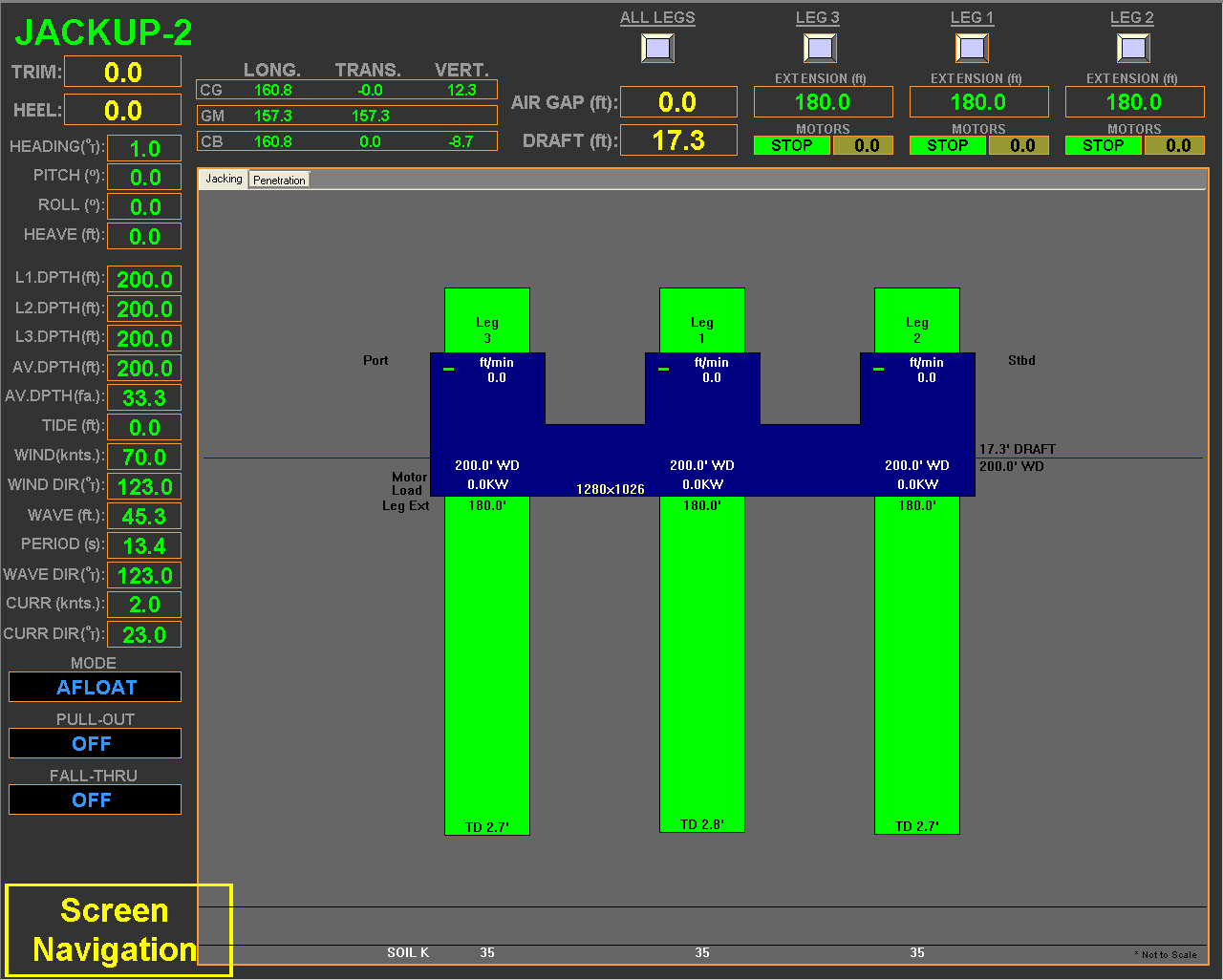

Jack-up units play a critical role in offshore energy operations, particularly in drilling, workover and maintenance activities in shallow to moderate water depths. Although often perceived as simpler than floating assets, jack-ups present a distinct set of operational and safety challenges. Their reliance on seabed interaction, structural loading and precise operational sequencing means that errors during critical phases can have severe consequences. Simulation-based training provides a safe and effective way to prepare crews for the unique risks associated with jack-up operations.
Simulation enables offshore personnel to practise realistic scenarios in a controlled environment. Crews can experience normal operations, abnormal situations and emergency events without exposing people, assets or the environment to risk. For jack-up units, where many critical activities are infrequent and highly consequential, simulation offers training opportunities that cannot be replicated safely offshore.
The Unique Operational Characteristics of Jack-Up Units
Jack-up units differ fundamentally from floating offshore assets. They are mobile installations that are towed or self-propelled to location, where their legs are lowered to the seabed and the hull is elevated above the water surface. Once elevated, the unit effectively becomes a fixed installation, but its stability and integrity depend on the interaction between the legs, the seabed and the structural capacity of the unit.
Key operational characteristics include seabed assessment and preload, leg penetration behaviour, structural loading during jacking operations and sensitivity to environmental conditions during critical phases. Unlike floating assets, jack-ups are particularly vulnerable during transit, positioning, preloading and jacking, when stability margins can be reduced and loads can change rapidly.
What Simulation-Based Training Looks Like for Jack-Ups
Simulation-based training for jack-up units uses detailed models to replicate leg behaviour, seabed interaction, jacking systems, hull response and environmental forces. Control interfaces reflect those used offshore, allowing trainees to practise realistic tasks and decision-making processes.
Training for Site Assessment and Preloading Operations
Site assessment and preloading are among the most critical phases of jack-up operations. Incorrect assessment of seabed conditions or improper preload procedures can result in uneven leg penetration, excessive structural loads or foundation failure.
Simulation allows crews to practise preloading operations under different seabed conditions and environmental scenarios. Trainees can explore how variations in soil strength, penetration rates and loading sequences affect unit behaviour. This experience supports safer decision-making and improved awareness of early warning signs during real operations.
Jacking Operations and Structural Load Management
The process of jacking the hull up or down involves significant structural loading and requires precise coordination. Errors during jacking can result in overstressing of legs, rack and pinion systems or hull structures.
Simulation-based training enables crews to practise jacking sequences, monitor load distributions and respond to abnormal indications. By rehearsing these operations in a simulated environment, personnel develop confidence and competence in managing one of the most mechanically demanding aspects of jack-up operation.
Weather Sensitivity and Operational Limits
Jack-up units are particularly sensitive to environmental conditions during transit, positioning and jacking. Wind, wave and current conditions can change rapidly, and decisions regarding weather windows are critical to safety.
Simulation allows crews to explore the effects of changing environmental conditions on jack-up operations. Trainees can practise decision-making related to go/no-go criteria, contingency planning and safe suspension of operations. This experience supports more conservative and informed operational decisions offshore.
Preparing for Abnormal and Emergency Scenarios
Although jack-ups are elevated above the water during operations, they are not immune to emergencies. Scenarios such as leg damage, punch-through events, jacking system failures, power loss or severe weather escalation demand rapid and coordinated response.
Simulation provides a platform for rehearsing these high-consequence scenarios. Crews can practise emergency procedures, communication between roles and coordination with onshore support. This preparation improves readiness and reduces the likelihood of escalation during real incidents.
Integrating Marine, Structural and Operational Systems
Jack-up operations require close integration between marine procedures, structural considerations and operational activities. Decisions related to positioning, preloading and jacking have direct implications for structural integrity and operational safety.
Simulation supports integrated training that reflects these interdependencies. By practising scenarios that cut across disciplines, crews develop system-level awareness and a better understanding of how actions in one area affect overall unit behaviour.
Developing Teamwork and Non-Technical Skills on Jack-Ups
Safe jack-up operations depend heavily on effective teamwork, communication and situational awareness. During critical phases, multiple roles must coordinate actions and share information clearly.
Simulation-based training provides a realistic environment for developing these non-technical skills. Team-based scenarios allow crews to practise leadership, communication and workload management under pressure, supported by structured debriefing to reinforce learning.
Online and Cloud-Based Simulation for Jack-Up Training
Digital delivery has expanded access to jack-up simulation training. Cloud-based simulators enable remote access, flexible scheduling and pay-per-use models. This supports refresher training, preparation for specific campaigns and consistent training across geographically distributed crews.
Online access also allows organisations to respond quickly to changes in procedures, asset configuration or lessons learned from operations.
Implementation Considerations
To be effective, jack-up simulators must accurately reflect unit design, leg geometry, jacking systems and seabed characteristics. Models should be validated and updated as units are modified or redeployed. Instructor capability remains critical, with skilled facilitation and structured debriefing essential to translate simulated experience into improved offshore performance.
Simulation should be integrated into a broader training strategy alongside classroom instruction, mentoring and offshore experience. Used in this way, simulation reinforces learning and supports consistent standards across crews and units.
Conclusion
Jack-up units present a distinct set of operational risks driven by their interaction with the seabed, structural loading and sensitivity during critical phases. Simulation-based training provides a practical and effective way to prepare personnel for these challenges.
By enabling realistic, repeatable and risk-free practice of complex and high-consequence operations, simulation strengthens technical competence, improves teamwork and enhances emergency preparedness. As offshore operations continue to demand higher safety and performance standards, simulation will remain an essential component of training for jack-up units.
To find out more about the Pisys Jack-Up Training Simulator, Click Here
