


A Permit to Work (PTW) system is a formal, structured process used to plan, authorise, control and monitor work activities that present a higher-than-normal level of risk. It provides a clear framework for ensuring that hazardous work is identified, assessed, communicated and carried out safely.
At its simplest, a PTW system acts as a contract between those responsible for planning and authorising work and those responsible for carrying it out. It confirms that hazards have been identified, risks assessed and appropriate controls implemented before work begins. More importantly, it provides ongoing assurance that those controls remain effective throughout the task.
PTW systems are widely used in industries such as offshore energy, utilities, manufacturing, construction and heavy engineering, but the principles apply wherever work involves risk. When implemented properly, a PTW system becomes one of the most important operational safety controls an organisation has. (Read about the similarities and differences between PT, Control of Work and ISSOW)
Why Permit to Work Systems Exist
Most serious workplace incidents are not caused by a lack of rules or procedures. They occur when hazards are misunderstood, controls are bypassed, or work is carried out without full awareness of the risks involved.
Permit to Work systems exist to address these weaknesses. They slow work down deliberately at critical moments, forcing people to pause, think and confirm that it is safe to proceed. This pause is not an administrative inconvenience; it is a safety intervention.
A PTW system ensures that assumptions are challenged, responsibilities are clarified and risks are actively managed rather than passively accepted.
Learn more about why Permit to work systems are important
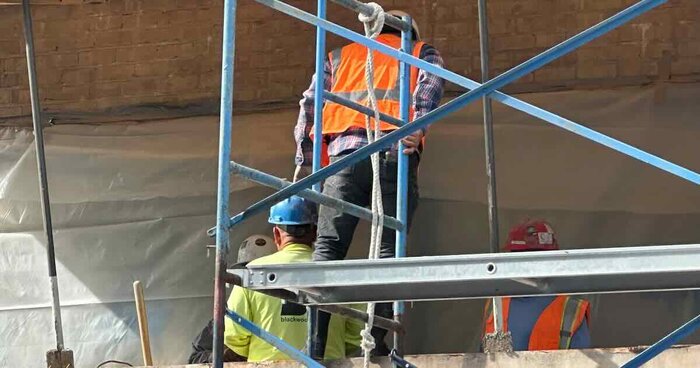

What a Permit to Work System Controls
A PTW system is typically applied to work activities where failure could result in serious injury, environmental harm, asset damage or operational disruption. These activities may be routine, but they carry inherent risk.
Common examples include hot work, confined space entry, work at height, electrical isolation, mechanical maintenance, lifting operations, pressure testing and excavation. In each case, the hazard is not just the task itself, but how that task interacts with the surrounding environment, equipment and people. Read more about the types of activity typically covered by a permit to work.
The PTW system ensures that these interactions are identified and controlled before work begins.
The Core Components of a PTW System
While PTW systems vary by organisation and industry, most include a common set of components.
These typically include a clear description of the work, identification of hazards, specification of control measures, definition of roles and responsibilities, authorisation by a competent person, and formal close-out once work is complete. For a detailed walkthrough of how these stages connect in practice, read our guide to the steps in a PTW workflow.
Each component serves a purpose. Together, they form a control system that links planning, execution and supervision into a single process. Systems such as the Pisys PTW allow all the PTW activities to be centrally managed and monitored.
Defining the Work Scope Clearly
One of the most important elements of a PTW system is a clear definition of the work scope. Ambiguity at this stage creates risk later.
The permit must describe exactly what work is being done, where it will take place, and what activities are included or excluded. Vague descriptions such as “general maintenance” or “repair work” are insufficient for high-risk tasks.
A clear scope helps everyone involved understand what is authorised and what is not. It also provides a basis for identifying hazards and determining appropriate controls.
Identifying Hazards and Assessing Risk
Hazard identification is a core function of the PTW system. The permit should capture the hazards specific to the task, location and timing of the work.
This goes beyond generic hazard lists. It requires consideration of factors such as energy sources, environmental conditions, interfaces with other activities, access constraints and human factors.
The PTW system often draws on existing risk assessments, method statements or job safety analyses, but it adds value by applying that information to a specific instance of work.
Read more about managing Risk with a Permit to Work system


Defining and Verifying Control Measures
Once hazards are identified, the PTW system defines the controls required to manage those risks. These controls may include isolations, barriers, permits, PPE, competency requirements, supervision levels or environmental limits.
A critical feature of a PTW system is verification. Controls are not just listed; they are confirmed. Someone is required to check that isolations are in place, barriers are erected, equipment is available and conditions are suitable.
This verification step distinguishes a PTW system from a paper exercise. It ensures that planned controls exist in reality, not just on a form.
Assigning Roles and Responsibilities
PTW systems rely on clear accountability. Each stage of the process assigns responsibility to specific roles, such as permit requester, permit issuer, supervisor and permit holder.
These roles must be clearly defined and understood. The permit holder, for example, is typically responsible for ensuring that work is carried out in accordance with permit conditions and that the workforce understands those conditions.
Clear accountability reduces confusion and ensures that decisions are made by people with appropriate authority and competence.
Managing Contractors
In many organisations, Permit to Work systems are closely linked to contractor management because contractors are often responsible for specialist or higher-risk activities. A robust PTW process helps ensure that only competent, authorised contractors are permitted to carry out work, with the necessary certifications, inductions and approvals verified in advance. By integrating contractor checks into the permit workflow, organisations reduce the risk of unqualified personnel undertaking hazardous tasks and improve consistency in how standards are applied across sites. This is explored in more detail in our article on ensuring contractor compliance as a critical component of HSE management, which looks at how structured contractor oversight strengthens safety, accountability and operational control.
Authorisation and Independent Review
Before work can begin, the permit must be authorised by a competent person. This authorisation is not a rubber stamp; it is an independent check that the work has been properly planned and that risks are adequately controlled.
The authorising person should challenge assumptions, confirm that controls are proportionate, and ensure that the permit reflects current conditions.
This independent review provides an additional layer of protection against oversight or complacency.
Managing Work During Execution
A PTW system does not end when work starts. Once issued, the permit remains active and must be managed throughout the life of the task.
Supervisors are responsible for ensuring that work is carried out as planned, that controls remain effective, and that any changes in conditions are assessed. If circumstances change significantly, the permit may need to be amended, suspended or reissued.
This dynamic management recognises that risk is not static. A PTW system provides a framework for responding to change safely.
Handling Simultaneous Operations
One of the most important roles of a PTW system is managing simultaneous operations ('SIMOPS'). When multiple activities take place at the same time, interactions between tasks can introduce new hazards.
A well-designed PTW system provides visibility of all active permits and enables conflicts to be identified and managed. This may involve sequencing work, imposing additional controls, or preventing certain activities from overlapping.
Without this coordination, individual tasks may be safe in isolation but dangerous in combination.
Read more about managing SIMOPS within PTW
Suspending and Reinstating Work Safely
There are times when work must be stopped. Changes in weather, equipment failure, personnel changes or the start of other activities may make it unsafe to continue.
A PTW system provides a formal mechanism for suspending work safely. This ensures that everyone understands that work has stopped, that controls remain in place, and that work does not resume without proper review.
Reinstatement of work requires confirmation that conditions are once again safe and that permit conditions remain valid.
Closing Out the Permit
Formal close-out is a critical but often overlooked step. Closing a permit confirms that work is complete, that equipment has been returned to a safe state, and that any temporary controls have been removed or left in place as intended.
Close-out also creates a record of what work was done, when and under what conditions. This information is valuable for audits, investigations and learning.
Without proper close-out, residual hazards may remain unnoticed.
Embedding Accountability and Ownership
A PTW system embeds accountability throughout the organisation. By assigning named roles and requiring formal sign-off, it reinforces responsibility for safety at every stage of the work.
This clarity supports better decision-making and reduces reliance on informal practices. People know who is responsible for authorising work, supervising it and confirming completion.
Over time, this builds a stronger safety culture where ownership of risk is explicit rather than assumed.
Legislation and Guidance
In the UK, permit-to-work isn’t a single standalone legal requirement. Instead, PTW systems are commonly used as part of demonstrating compliance with the UK’s broader duties to manage risk and implement safe systems of work under the Health and Safety at Work etc. Act 1974.
Those general duties are reinforced by the Management of Health and Safety at Work Regulations 1999, which require employers to assess risks and put appropriate arrangements in place to control them; PTW is one of the common “management arrangements” used where the work is higher risk or needs tighter control.
For high-risk activities, PTW often sits alongside more specific regulations, depending on the hazard. Examples include the Confined Spaces Regulations 1997 for work in confined spaces, the Electricity at Work Regulations 1989 for electrical work, the Provision and Use of Work Equipment Regulations 1998 (PUWER) for the safe use and maintenance of work equipment, COSHH 2002 for hazardous substances, and DSEAR 2002 for dangerous substances and explosive atmospheres. If you operate in construction, PTW is often used as part of contractor control and coordination under CDM 2015. For major hazard sites, PTW is also commonly part of the management system expected under COMAH 2015.
When it comes to “what good looks like”, the key UK reference is the HSE guidance document HSG250, Guidance on permit-to-work systems, which sets out principles for PTW systems and explicitly addresses electronic permits, including controls like preventing unauthorised issue/acceptance, prohibiting remote issue without a site visit, managing changes to issued permits, ensuring permits can be displayed at the job site, avoiding “cut and paste” permitting, and having backup arrangements for system failure. HSE also publishes related guidance that often connects tightly to PTW in practice, such as HSG253 on safe isolation of plant and equipment (frequently a key dependency for PTW controls like energy isolation). Read more about the UK HSG250 guidance
If you’re operating globally (or benchmarking beyond the UK), there are a few widely-recognised equivalents that cover “permit-style” control of work in specific contexts. In the US, OSHA has a permit-required confined spaces standard (29 CFR 1910.146) and a control of hazardous energy/lockout-tagout standard (29 CFR 1910.147). In electrical safety, many organisations reference NFPA 70E as a recognised standard for electrical safety-related work practices. At a management-system level, some organisations use ISO 45001 to structure their occupational health and safety management system.
Preventing Incidents Through Structured Control
PTW systems are not designed to eliminate risk entirely. They are designed to manage it systematically.
By structuring how hazardous work is planned and authorised, PTW systems reduce the likelihood of errors, omissions and unsafe assumptions. They provide multiple opportunities to identify and correct issues before harm occurs.
Many serious incidents have occurred when PTW processes were absent, bypassed or poorly applied. A robust PTW system addresses these vulnerabilities directly.
Learning and Continuous Improvement
PTW systems also support organisational learning. When incidents or near misses occur, permit records can be reviewed to understand how work was planned and controlled.
This information can be used to improve risk assessments, update permit templates, refine training and strengthen controls. Over time, the PTW system evolves in response to experience rather than remaining static.
This continuous improvement is essential in dynamic operational environments.
Digital Permit to Work Systems
Many organisations now use digital PTW systems instead of paper-based permits. Digital systems can improve consistency, visibility and integration with other safety processes.
Digital PTW platforms can enforce workflows, prevent permits from being issued without required approvals, and provide real-time visibility of active work. They can also integrate with risk assessment, isolation management, action tracking and incident reporting systems.
This integration strengthens situational awareness and supports more informed decision-making.
For organisations moving away from paper-based processes, Pisys PTW supports consistent, auditable permit workflows aligned to operational reality.
Avoiding Common PTW Pitfalls
Despite their importance, PTW systems can fail if they are poorly implemented. Common problems include treating permits as paperwork, overusing permits for low-risk work, using generic hazard lists, and failing to update permits when conditions change.
A successful PTW system must remain practical, relevant and focused on real risk. It should support work, not obstruct it unnecessarily.
Regular review and engagement with users help ensure the system remains effective.
The Role of Leadership
Leadership behaviour plays a significant role in the effectiveness of a PTW system. When leaders treat permits seriously, challenge unsafe practices and support work stoppage when needed, it reinforces the importance of the system.
Conversely, when leaders bypass permits under pressure, it undermines the system and encourages unsafe behaviour.
Visible leadership commitment is essential for achieving buy-in in the early stages of adoption, and for maintaining the integrity of PTW processes.
Read more about getting stakeholder buy-in when implementing a Permit to Work system.
Information Security Governance
A Permit to Work system does not just control physical work activities, it also manages highly sensitive operational information. This can include hazardous work descriptions, isolation details, site layouts, personnel roles, and approval decisions. As a result, information security governance is a critical but often overlooked aspect of effective PTW management.
A well-governed PTW system must ensure that the right people can access the right information at the right time, and no more than that. This typically involves role-based access control, where permissions are aligned with job function, responsibility, and organisational boundaries. For example, a contractor may need to view and acknowledge a permit, while only authorised personnel can create, approve, suspend, or close it.
Security governance also requires clear accountability and traceability. Every action taken within the PTW system such as permit approval, modification, suspension, or handover, should be recorded with a full audit trail. This supports compliance, incident investigation, and assurance that the permit process is being followed correctly.
In multi-organisation or multi-site environments, information security governance becomes even more important. PTW systems must prevent unauthorised access across teams, contractors, or operating companies, while still enabling collaboration where it is required for safe work execution.
Ultimately, strong information security governance ensures that the PTW system remains trustworthy, auditable, and resilient, supporting safe operations without introducing unnecessary risk through poor data control or unclear permissions. Read more about how Pisys handles the security of data.
Training and Competence
A PTW system is only as effective as the people who use it. Training must ensure that everyone involved understands not just how to complete a permit, but why the system exists and how it protects people.
Competence requirements should be clearly defined, and refresher training should be provided regularly to maintain standards.
Understanding the purpose behind the process increases engagement and reduces resistance.
Summary
A Permit to Work system is a cornerstone of effective safety management. It provides a structured, disciplined approach to controlling high-risk work and ensuring that hazards are identified, communicated and managed.
When designed well and used consistently, a PTW system such as the Pisys system improves clarity, accountability and confidence. It supports safer work, better coordination and stronger organisational learning.
In environments where risk is present; which is most workplaces, a Permit to Work system is an essential control that protects people, assets and operations every day.
