


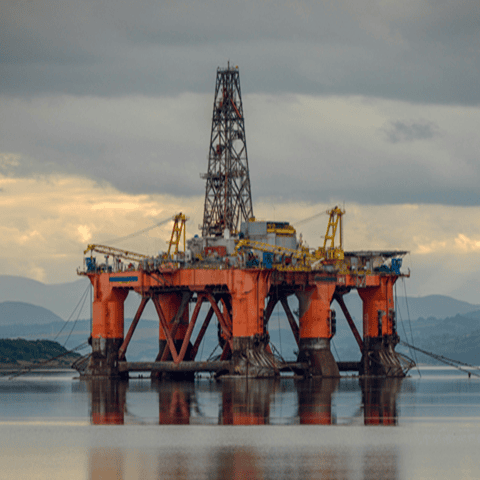
Rig move operations are among the most complex and high-risk activities in offshore and heavy industrial environments. These operations involve relocating large structures, coordinating multiple vessels, managing heavy loads and responding to changing environmental conditions. The combination of technical complexity and operational uncertainty means that preparation is critical.
Simulator training has become an increasingly valuable tool for improving safety during rig move operations. By allowing crews to rehearse activities and responses in a controlled environment, simulation helps bridge the gap between planning and execution, strengthening both technical competence and team coordination.
The Complexity of Rig Move Operations
Rig moves involve a wide range of interdependent activities. These include towing, positioning, ballast management, deck operations, navigation and communication between multiple parties. Each activity carries its own hazards, and the interaction between them can introduce additional risk.
Many of the challenges associated with rig moves arise not from individual tasks, but from how those tasks interact over time. A decision made by one team can have immediate implications for others, particularly when operations are being carried out in parallel or under time pressure.
Traditional training methods often struggle to replicate this level of complexity. Simulator training addresses this by creating realistic, dynamic environments where interactions and dependencies can be experienced rather than imagined.
What Simulator Training Provides
Simulator training places participants into a realistic operational environment that mirrors rig move conditions. This may include virtual representations of rigs and vessels, environmental factors such as wind and wave conditions, and realistic control systems.
Participants are required to make decisions, communicate with other roles and respond to changing conditions in real time. This active engagement builds familiarity with operational challenges and reinforces correct behaviours more effectively than classroom instruction alone.
Learn more about the Pisys range of Training Simulators for the Energy sector.
Improving Decision-Making Under Pressure
Effective decision-making during rig moves depends on situational awareness, communication and the ability to anticipate how conditions may change. Simulator training allows crews to practise these skills repeatedly in scenarios that reflect real operational pressures.
Participants can see the consequences of their decisions as scenarios unfold, reinforcing an understanding of cause and effect. This experiential learning helps teams develop confidence and judgement that carry over into live operations.
Strengthening Team Communication and Coordination
Rig move operations rely on close coordination between multiple roles and organisations. Miscommunication or unclear responsibilities can quickly lead to unsafe situations.
Simulator training brings teams together in a shared environment where communication protocols, handovers and escalation processes can be practised. This shared experience helps build a common mental model of the operation, improving coordination and reducing misunderstandings offshore.
Emergency and Abnormal Scenarios During Rig Move Operations
Rig move operations are vulnerable to events that develop quickly and leave little time for deliberation. When abnormal situations arise, crews must rely on training, shared understanding and rehearsed responses rather than improvised decision-making. Simulator training plays a critical role in preparing teams for these moments by allowing them to experience realistic disruptions in a safe environment.
The following scenarios represent some of the most challenging situations encountered during rig moves and highlight where simulation-based training adds significant safety value.
Loss of Towing Control
Maintaining control of a rig during a move depends on the integrity of towing connections and coordination between vessels. Failures may occur due to equipment degradation, incorrect tension management, sudden environmental changes or breakdowns in communication.
When towing control is compromised, the rig may begin to move unpredictably. In congested areas or restricted waters, this loss of control can escalate rapidly into a serious hazard.
Simulator training allows crews to practise recognising early signs of towing issues, coordinating alternative control measures and executing recovery strategies in a structured way.
Rig Stability and Ballast Control Challenges
Rig stability must be actively managed throughout a move. Changes in ballast, load configuration or environmental forces can affect stability in ways that are not always immediately obvious.
Incorrect sequencing or delayed response can lead to excessive heel or trim, reducing safety margins. Simulator training allows crews to experience how stability issues develop and practise corrective actions before conditions become critical.
Deteriorating Environmental Conditions
Weather conditions can change rapidly during offshore operations. Increasing wind, wave height or current strength can make towing and positioning more difficult and increase overall workload.
Simulator training enables crews to operate under progressively worsening conditions, practising decision-making around limits, pause points and abort criteria. This helps teams recognise when conditions are approaching unsafe thresholds.
Equipment and System Malfunctions
Rig moves depend on a wide range of mechanical and electrical systems. Failures may involve towing machinery, winches, power systems or positioning equipment.
Simulator scenarios allow crews to practise diagnosing faults, coordinating responses and deciding when to suspend operations. This reduces reliance on ad-hoc decision-making during real failures.
Navigation and Situational Awareness Errors
Precise navigation is essential during rig moves, particularly in congested areas or near subsea infrastructure. Errors can arise from poor situational awareness, conflicting information or communication breakdowns.
Simulator environments replicate complex navigation challenges, allowing crews to practise maintaining awareness, cross-checking data and correcting deviations before they escalate.
Learning Through Repetition and Variation
One of the key strengths of simulator training is the ability to repeat scenarios with variations. Crews can experience similar challenges under different conditions, reinforcing adaptability and problem-solving skills.
This repetition builds familiarity with abnormal situations and reduces hesitation during live operations, where time pressure and uncertainty are unavoidable.
Linking Simulation to Procedures and Planning
Simulator training is most effective when aligned with real procedures, emergency plans and control frameworks. Training scenarios should reflect actual work processes, Permit to Work requirements and communication protocols.
Lessons learned during simulation exercises can inform updates to procedures, risk assessments and planning assumptions, strengthening overall operational resilience.
Leadership Support and Continuous Improvement
Visible leadership support reinforces the importance of simulator training. When leaders engage with training outcomes and support improvements identified through simulation, it sends a clear message that preparedness matters.
Simulator training should be part of an ongoing improvement cycle, not a one-off event. Regular review ensures that scenarios remain relevant as equipment, processes and operating environments evolve.
Managing Risk
Rig move operations will always involve uncertainty and risk. What distinguishes well-managed operations is the ability to respond effectively when conditions change or unexpected events occur.
Simulator training provides a practical way to build experience, improve decision-making and strengthen team coordination without exposing people or assets to harm. By integrating realistic scenarios into training programmes, organisations can improve safety performance and operational confidence during some of their most demanding activities.
Effective simulation equips teams to manage risk with greater clarity, confidence and control. Learn more abut the use of simulator based training in the Energy Sector.
