

Confined Space Entry and Permit to Work: A Practical Guide for HSE Teams
Confined space entry is widely recognised as one of the highest-risk activities in industrial and infrastructure environments. Tanks, vessels, pits, silos, manholes, tunnels and similar spaces can present serious hazards that are not always obvious. Low oxygen levels, toxic or flammable atmospheres, engulfment risks and restricted escape routes mean that errors in confined spaces often have severe consequences.
Because of this, confined space work requires more than routine task planning. It demands a combination of competent people, clear authorisation and robust control of work. This is where confined space entry certification and a well-implemented Permit to Work (PTW) system come together as critical HSE controls (Learn about what a permit to work system is and why it's important).
Understanding What Makes a Confined Space Hazardous
A confined space is not simply a small or awkward place to work. Under health and safety legislation, it is typically defined as an enclosed or partially enclosed area that is large enough for a person to enter, has limited means of access or exit, and is not designed for continuous occupancy.
What makes confined spaces particularly dangerous is how quickly conditions can change. Atmospheric hazards may not be visible without testing. Oxygen levels can drop, toxic gases can build up, or flammable vapours can reach dangerous concentrations. Physical factors such as poor lighting, heat stress, restricted movement and limited rescue access increase the risk further.
These characteristics mean that informal controls and generic risk assessments are not enough. Confined space work needs formal, repeatable processes that ensure hazards are identified, controls are applied, and only competent people are authorised to enter.
The Role of Confined Space Entry Certificates
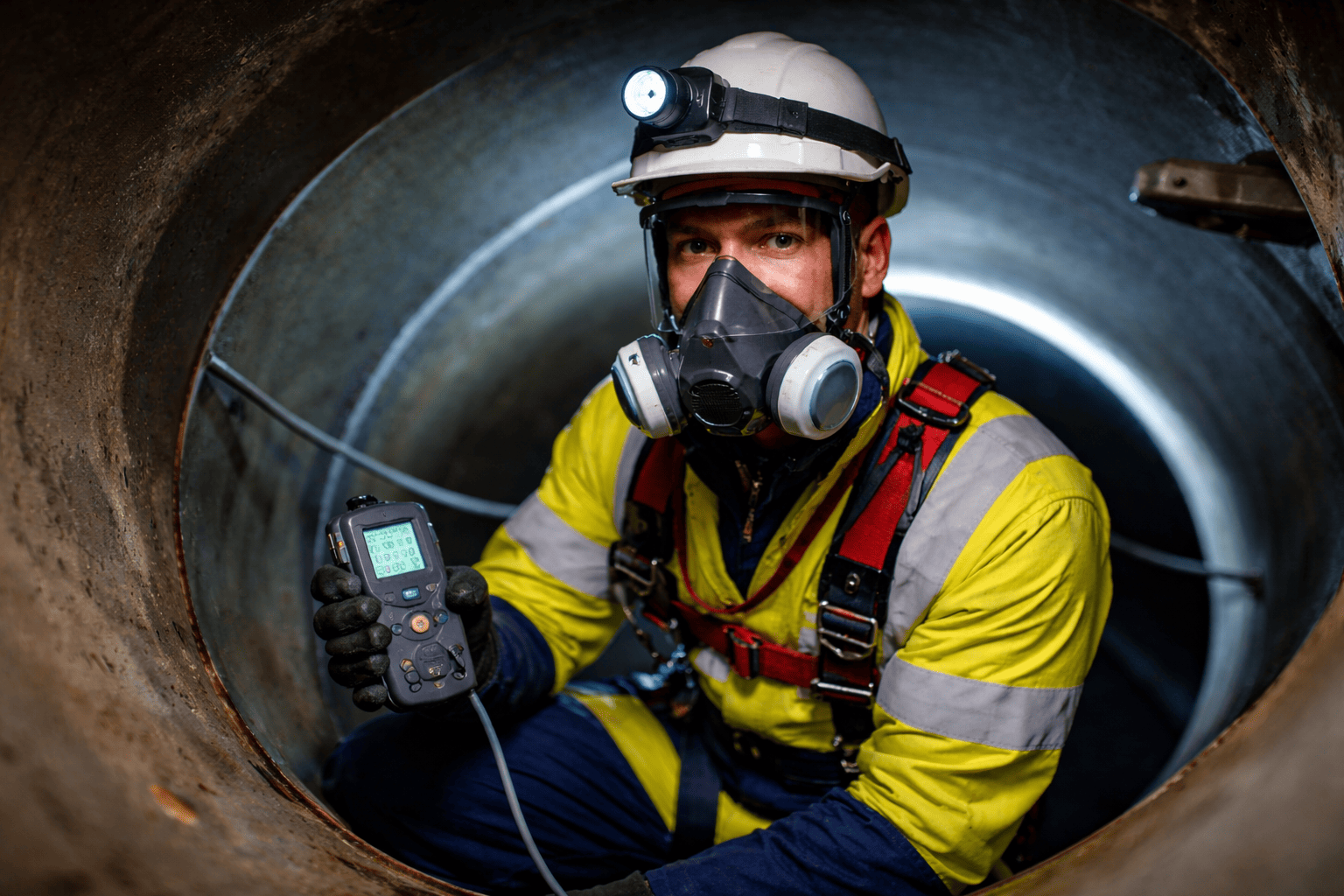
A confined space entry certificate demonstrates that an individual has been trained and assessed to work safely in confined spaces. This usually includes recognising confined space hazards, using gas detection equipment, following safe entry procedures, wearing appropriate protective equipment and responding to emergencies.
From an HSE perspective, these certificates provide assurance that workers have the necessary knowledge and skills, and they help organisations demonstrate compliance with regulatory expectations around competence. However, certificates alone do not prevent unsafe work.
The real value comes when competency information is actively used to control who can be authorised for confined space entry. This is where integration with a Permit to Work system becomes essential.
Why Confined Space Work Requires a Permit to Work
A Permit to Work system provides a formal framework for controlling hazardous activities. For confined space entry, the permit acts as documented confirmation that the work has been properly planned and that all required safety measures are in place before entry begins.
A confined space permit typically defines the scope of work, the location, the hazards involved, the control measures required and the people authorised to carry out the task. It also establishes a clear process for approval, issue, monitoring and handback.
This structured approach is critical because confined space incidents often occur when assumptions are made or communication breaks down. A Permit to Work system forces teams to slow down, verify conditions and confirm that nothing has been overlooked before anyone enters a hazardous environment.
Key Elements of a Confined Space Entry Permit
A well-designed confined space entry permit starts with a task-specific risk assessment that considers the characteristics of the space, the work being carried out and the people involved.
Isolation details are another essential element. Confined spaces may contain mechanical, electrical, hydraulic or chemical hazards that must be isolated before entry. The permit should clearly record what has been isolated, how it has been isolated and how isolation will be verified.
Atmospheric testing is central to confined space safety. Permits should capture initial gas test results, acceptable limits and any requirements for continuous monitoring. This ensures conditions are verified rather than assumed.
The permit should also specify required personal protective equipment, tools approved for use in the space and clear emergency and rescue arrangements. Finally, it records authorisations and sign-offs, confirming that competent individuals have reviewed the work and agreed it is safe to proceed.
Defining Roles Within the Permit Process
Clear roles and responsibilities are essential for effective confined space control. This typically includes a permit creator who prepares the permit and risk assessment, an approver who reviews the planned work and controls, an issuer who authorises the start of work and a handback authority who confirms the space is safe once work is complete.
In higher-risk environments, additional review steps may be included to provide extra assurance. The key point is that responsibility is explicit at each stage, and that no single individual is expected to make safety-critical decisions in isolation.
Monitoring, Suspension and Handback
Confined space safety does not end when a permit is issued. Conditions can change during the task, and permits may need to be suspended if controls are compromised.
Monitoring arrangements should be clearly defined, including supervision, atmospheric testing frequency and access control. Entry and exit from the space should be recorded so it is always clear who is inside.
Handback is just as important as authorisation. At the end of the task, the permit should only be closed once the space has been inspected, equipment removed, isolations safely restored and the area confirmed as secure.
Digital Permit to Work and Confined Space Safety
Paper permits can be effective, but they are vulnerable to loss, duplication and poor visibility. Digital Permit to Work systems address many of these issues by centralising permits, automating checks and providing real-time visibility of work activity.
For confined space entry, a digital PTW system can automatically validate that only personnel with the correct confined space certificates are authorised. It can link permits to risk assessments, isolation records and rescue plans, ensuring all relevant information is available in one place.
Digital systems also improve oversight. Supervisors can see active confined space permits across a site, identify overlapping activities and intervene quickly if conditions change. For HSE teams, complete audit trails simplify compliance reporting and incident investigation.
The Pisys Electronic Permit to Work system ensures all precautions are documented, controls verified and certificates properly authorised before anyone enters a confined space.
Building a Stronger Confined Space Safety Culture
While compliance is essential, the ultimate goal is preventing harm. A robust Permit to Work system supports a safety culture where risks are discussed openly, controls are verified rather than assumed and work only proceeds when conditions are clearly safe.
Integrating competency management, risk assessment and permit control reinforces the message that confined space work requires discipline and care. Over time, this reduces shortcuts and the normalisation of risk.
Final Thoughts
Confined space entry remains a high-risk activity, but it can be managed safely with the right systems in place. Combining confined space entry certification with a robust Permit to Work process provides a structured and defensible way to control hazards, protect workers and meet HSE obligations.

